Introduction: High Five cells (sometimes referred to as High-Five or Hi5) represent a safe, effective and inexpensive platform for protein production. Their remarkable ability to produce very large amounts of recombinant proteins such as diagnostic reagents and recombinant vaccines remains unmatched.
The High Five cells were originally isolated from insects in BTI s Granados lab in the late 1980s. BTI is the sole proprietor of High Five cells and related sub-clones. (BTI; Boyce Thomson Institute, NY, USA). The KRIBIOLISA Hi5 (High Five) HCP ELISA kit is designed to quantitatively measure HCPs contamination in pharmaceutical products manufactured using the High Five Cells expression systems. The advantages of using insect cells for the expression of complex proteins, such as glycoproteins, G-protein-coupled receptors (GPCRs), virus-like particles (VLPs), and difficult-to-express mammalian proteins, have been extensively demonstrated (Stolt-Bergner et al., 2018).
High Five cells have been used successfully in the production of several viral-like particles (VLPs), which is of critical importance in vaccine development, such as the development of the COVID-19 vaccine (Krammer and Palese 2015; Cox, 2012). High Five cells have been shown to secrete large quantities of VLPs, making them suitable for purification and use in vaccine manufacturing (Fernndez and Vega, 2013). This characteristic, along with other advantages of High Five cells, such as their ability to produce multi-subunit proteins, highlights their potential for high-quality product output in biopharmaceutical manufacturing.
When considering the production of recombinant proteins to meet pharmaceutical requirements or for structural, functional, and drug screening studies, the preferred choice is the Baculovirus Expression Vector System (BEVS) (Assenberg et al., 2013; Fernndez and Vega, 2013). The BEVS offers flexibility, rapidity, and the ability to generate high titers of complex and multi-subunit gene products, even from challenging cellular locations such as cell membranes (Drugmand et al., 2012). One significant advantage of High Five cells is their high expression levels, making them ideal for large-scale protein production (Assenberg et al., 2013; Drugmand et al., 2012).
High Five cells are also well-suited to fold and post-translationally modify complex proteins, such as glycosylation. They can perform these modifications with high efficiency in a similar way to mammalian cell systems, and have been reported to produce 2-10x high levels of recombinant proteins compared to Sf9/Sf21 insect cells. Additionally, High Five cells have excellent culturing qualities, which reduces the need for complex bioreactor setups and equipment.
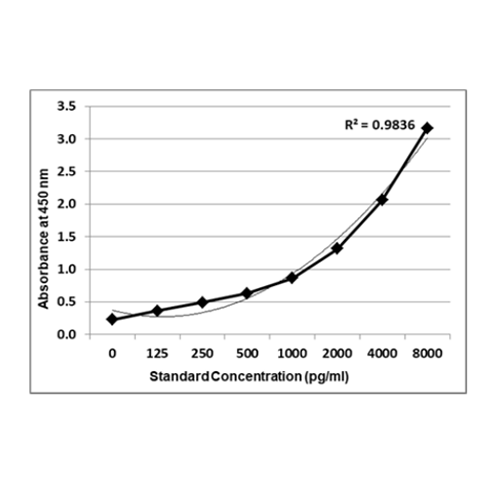
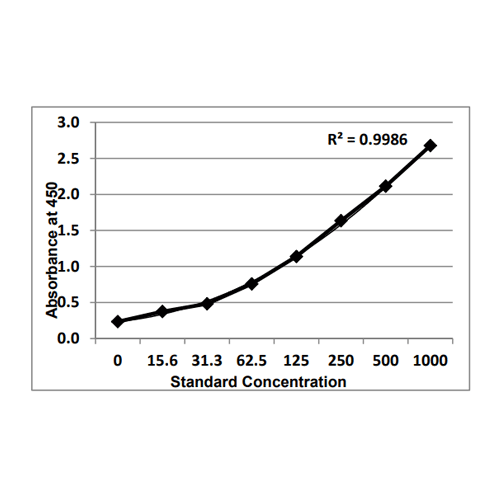
Principle: The method employs sandwich ELISA technique. Monoclonal antibodies are pre-coated onto microwells. Samples and standards are pipetted into microwells and H5 HCP present in the sample are bound by the antibodies. HRP conjugated antibodies are added and incubated to form a complex. After washing microwells in order to remove any non-specific binding, the substrate solution (TMB) is added to microwells and color develops proportionally to the amount of H5 HCP in the sample. Color development is then stopped by addition of stop solution. Absorbance is measured at 450 nm.
Sources: Stolt-Bergner, P.C., Overkleeft, H.S., van Kasteren, S.I. (2018). Chemical protein modification in drug discovery. Nat. Rev. Drug Discov., 17, 471493. Cox, M.M. (2012). Recombinant protein vaccines produced in insect cells. Vaccine, 30, 17591766. Krammer, F., Palese, P. (2015). Advances in the development of influenza virus vaccines. Nat. Rev. Drug Discov., 14, 167182. Assenberg, R., Wan, P.T., Geisse, S., Mayr, L.M. (2013). Advances in recombinant protein expression for use in pharmaceutical research. Curr. Opin. Struct. Biol., 23, 393402. Fernndez, J.M., Vega, M.C. (2013). Baculovirus Expression System in Medicago truncatula Cell Cultures for the Production of Recombinant Proteins. Mol. Biotechnol., 54, 371379. Drugmand, J.-C., Schneider, Y.-J., Agathos, S.N. (2012). Insect cells as factories for biomanufacturing. Biotechnol. Adv., 30, 11401157.