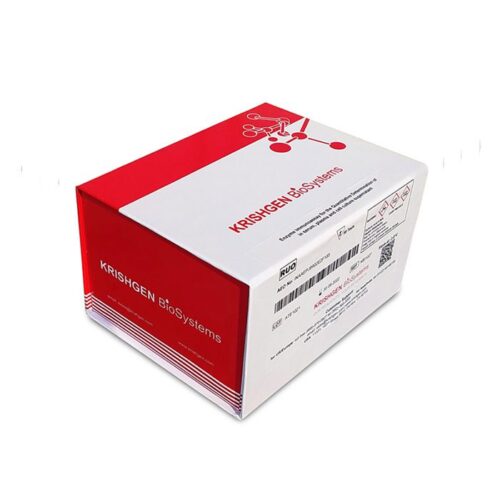
Introduction: Denosumab (trade names Prolia and Xgeva) is a human monoclonal antibody for the treatment of osteoporosis, treatment-induced bone loss, metastases to bone, and giant cell tumor of bone. Denosumab is contraindicated in people with low blood calcium levels. The most common side effects are joint and muscle pain in the arms or legs. Denosumab is a RANKL inhibitor, which works by preventing the development of osteoclasts which are cells that break down bone (bone resorption). Intended Use: The KRIBIOLISA™ Anti- Denosumab ELISA is used as an analytical tool for quantitative determination of Anti-Denosumab in human serum and plasma. Principle: The method employs the sandwich immunoassay technique. Denosumab is pre-coated onto microwells. Samples or standards are pipetted into microwells and antibodies to Denosumab present in the sample are bound by the capture antibody. After washing microwells, HRP conjugate is pipetted and incubated. Free HRP conjugate will be removed by washing cycle. The ready to use substrate solution (TMB) is added to microwells and color develops directly proportionally to the amount of Anti- Denosumab present in the sample. Colordevelopment is then stopped by addition of stop solution. Absorbance is measured at 450 nm.

Additional information
| Sample Type | Human serum and plasma |
|---|---|
| Calibration Range | 0 ng/ml – 1000 ng/ml |
| Sensitivity | Limit Of Detection: 58 ng/ml, Limit Of Quantification: 60 ng/ml |
| Storage Temperature | The samples may be kept at 2 – 8 Degree Celcius for up to three days. Long-term storage requires the samples to be kept at -20 Degree Celcius. |
| Regulatory Status | Research Use Only available |
| Detection Method | Colorimetric |