

NIBSC Standards and their relevance in ELISA validation
What is NIBSC Validation and how is it relevant?
One of the issues that any scientist – especially in biotech and pharma – may face is that the quantification of their target product is subjective to the ELISA or assay they use, and the calibration standards included in that kit.
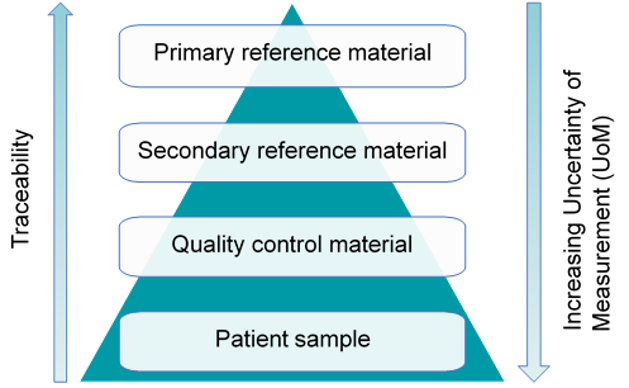
These complex assays, used to ensure efficacy and potency of biologicals including vaccines and drugs, need to be comparable from manufacturer to manufacturer. Inaccurate quantification of this biological activity could lead to fatal and disastrous results. Quality testing results, therefore, require a set of common standards that can be comparable to each other, allowing manufacturers to calibrate their own working standards to internationally acceptable accuracy.
“The system of World Health Organisation (WHO) international standards provides a set of common standards that are essential if quality testing results from different parts of the world are to be comparable. International standards are the ‘gold standards’ from which countries and manufacturers can calibrate their own working standards for biological testing.
International standards manufactured according to WHO guidelines and are calibrated in units of biological activity which are assigned following extensive studies involving multiple international laboratories. They are then formally established following review by the WHO Expert Committee on Biological Standardisation (ECBS) at its annual meeting in October.”1
NIBSC – the is an international organization that produces and distributes WHO international standards and reference materials for various types of biological reagents and assays.
International Units:
Biological reference materials sold be the NIBSC have an assigned value in IU, with the ng/ml or ug/ml conversion provided along with each lot of product that is manufactured. This allows calibration of working standards in IU or ng/ml, depending on the biological activity.
Development of International Standards:
The international standards are assigned a value through a multi-centered, international collaborative study that uses a various assays of different makes and types, different kinds of laboratories in several countries. A candidate which performs well in this collaborative study is then formalized as the international standard, with an arbitrarily assigned value in IU.
Krishgen kits that are NIBSC Validated:
Krishgen believes in ensuring the highest quality of validation for our assays, including a complete calibration of our working standards to available international reference materials. Currently, NIBSC has released six standards for assays to measure and quantify monoclonal antibody drugs. These are Rituximab (14/210), Infliximab (16/170), Etanercept (13/204), Adalimumab (17/236), Bevacizumab (18/210) and Trastuzumab (19/108). Two additional reference standards (for Cetuximab and Ustekinumab) will be available soon.
For available reference standards, corresponding Krishgen ELISA working standards have been calibrated for accuracy. Krishgen ELISA for drug quantification use the innovator drug (originally patented drug that is commercially available in the market) as the working standard. With the additional NIBSC validation, these standards offer high accuracy and reproducibility during quantification.

