Introduction:
Semaglutide (trade name Ozempic) is a pharmaceutical drug in development by a Danish company Novo Nordisk for the treatment of type 2 diabetes. It is marketed by the name Ozempic. As a glucagon-like peptide-1 receptor agonist, it lowers the blood sugar level by increasing the production of insulin. It was discovered in 2012, by a team of researchers at Novo Nordisk as a longer-acting alternative to liraglutide. Clinical trials were started in 2015, and phase 3 was completed in 2016. FDA approval was applied in December 2016, and in October 2017 FDA Advisory Committee voted 16-0 in favor. It can be used as both injection-type or oral-type drug.
Intended Use:
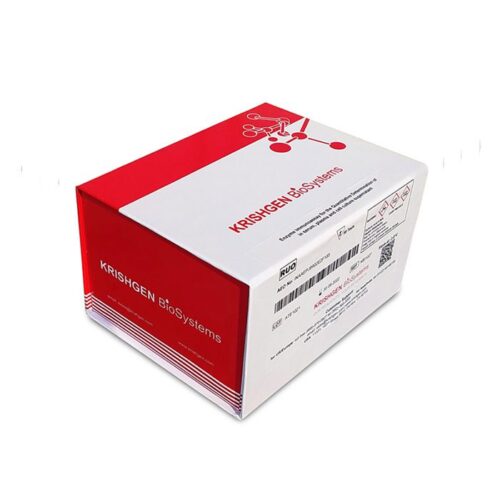
The KRIBIOLISA Semaglutide (Ozempic) ELISA kit is used for estimation of Semaglutide in solutions and human serum.
Principle:
The Semaglutide ELISA is a competitive immunoassay for the determination of Semaglutide. The anti-GLP-1 antibodies are coated on 96 well plate. A constant concentration of Biotinylated GLP-1 and varying concentration of unlabeled Semaglutide or sample compete for binding to anti-GLP-1 antibodies. Captured Biotinylated GLP-1 antibodies are subsequently bound by Streptavidin-HRP which produces a soluble colored product after addition of TMB substrate. The enzyme reaction is stopped by dispensing of stop solution into the wells. The optical density (OD) of the solution at 450 nm is inversely proportional to the amount of bound Semaglutide molecule present in standards or samples.
Validated Through Research Use
Independent researchers used this Semaglutide ELISA kit in a paper presented at DDL 2025 conference, investigating pulmonary delivery of semaglutide. The assay supported plasma PK profiling, highlighting its suitability for quantitative bioanalysis in drug development research.
Citations
-
- Stefania Glieca, Anna Signor, Martina Colognesi, Sara De Martin, Alessia Morri, Benedetta Campara, Eride Quarta, Aurora Squeri, Fabio Sonvico, Irene Rossi, Ross Blezard, Andrea Silvestri, Gianfranco Pasut & Francesca Buttini
The study highlights that an inhalable formulation of the glucagon-like peptide-1 (GLP-1), semaglutide, could represent a promising alternative to the subcutaneous route. The inhalation route provides rapid systemic absorption while mitigating gastrointestinal degradation typically seen with peptide hormone delivery. This method could enhance patient compliance and outcomes by allowing for more convenient dosing regimens.
- Stefania Glieca, Anna Signor, Martina Colognesi, Sara De Martin, Alessia Morri, Benedetta Campara, Eride Quarta, Aurora Squeri, Fabio Sonvico, Irene Rossi, Ross Blezard, Andrea Silvestri, Gianfranco Pasut & Francesca Buttini
 If you have published a paper by using any of our ELISA since 01/01/2023, kindly fill out the “Krishgen Publication Reward Application Form” with complete information and send it by at email: info@krishgen.com, with the subject “Krishgen Publication Reward”. We will get back to you with the Amazon / Krishgen Credit Reward after we confirm it ASAP!